Traditional asphalt mixture design in North
Carolina, which is based primarily on volumetric properties and rutting
performance, does not sufficiently ensure long-term durability across diverse
pavement conditions. While the Asphalt Pavement Analyzer (APA) has been used to
mitigate surface rutting, it lacks the capability to address durability,
leaving a critical gap in achieving balanced performance.
This research
addresses that gap by evaluating and proposing a framework for integrating both
cracking and rutting performance tests into the mix design and quality assurance
processes—a methodology known as Balanced Mix Design (BMD). A comprehensive
experimental program was conducted on 14 surface mixtures obtained across North
Carolina. Laboratory testing included Indirect Tension Cracking Test (IDT-CT)
for cracking resistance, APA for rutting, Indirect Tensile Strength at High
Temperature (IDT-HT), Cyclic Fatigue (CF), Dynamic Modulus (DM), and Stress
Sweep Rutting (SSR). Performance predictions were made using FlexPAVE™ to link
laboratory results with anticipated field performance.
The study found
substantial variability in both rutting and cracking resistance among mixtures,
with performance strongly tied to plant source. Cracking resistance, in
particular, showed complicated relationships across tests, with no single test
perfectly predicting the simulated field performance. Nonetheless, the IDT-CT
test demonstrated promise as a practical and efficient measure of cracking
resistance, with a preliminary threshold value of 14 suggested for North
Carolina surface mixtures. The IDT-HT test emerged as a cost-effective and
efficient rutting evaluation tool.
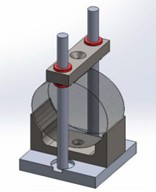
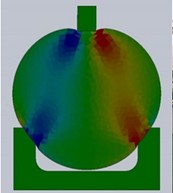
IDEAL-RT Test apparatus and stresses
Preliminary minimum strength thresholds of
approximately 150 kPa, 180 kPa, and 215 kPa were identified for RS9.5B, RS9.5C,
and RS9.5D mixtures, respectively. Importantly, performance test results
aligned well with simulated rutting but were less predictive of cracking
outcomes, reinforcing the need for multiple tests to ensure a comprehensive
understanding of mixture behavior. Survey responses from both contractors and NCDOT
personnel confirmed that current APA-based approvals rarely lead to test
failures or quality concerns, suggesting that the opportunity may exist to adjust
mixtures to improve IDT-CT results while producing mixtures that meet existing
APA thresholds.
While concerns regarding training, equipment, and lab capacity
were noted, personnel expressed a willingness to adopt a phased implementation
strategy. This study concludes with recommendations to incorporate IDT-CT and
IDT-HT tests into North Carolina’s asphalt mix design and QA framework. Doing
so may provide a more balanced assessment of mixture performance, reduce
variability in field outcomes, and extend pavement life.
Future work should
include refinement of performance thresholds and a pilot implementation to
validate specification updates in real-world conditions.


