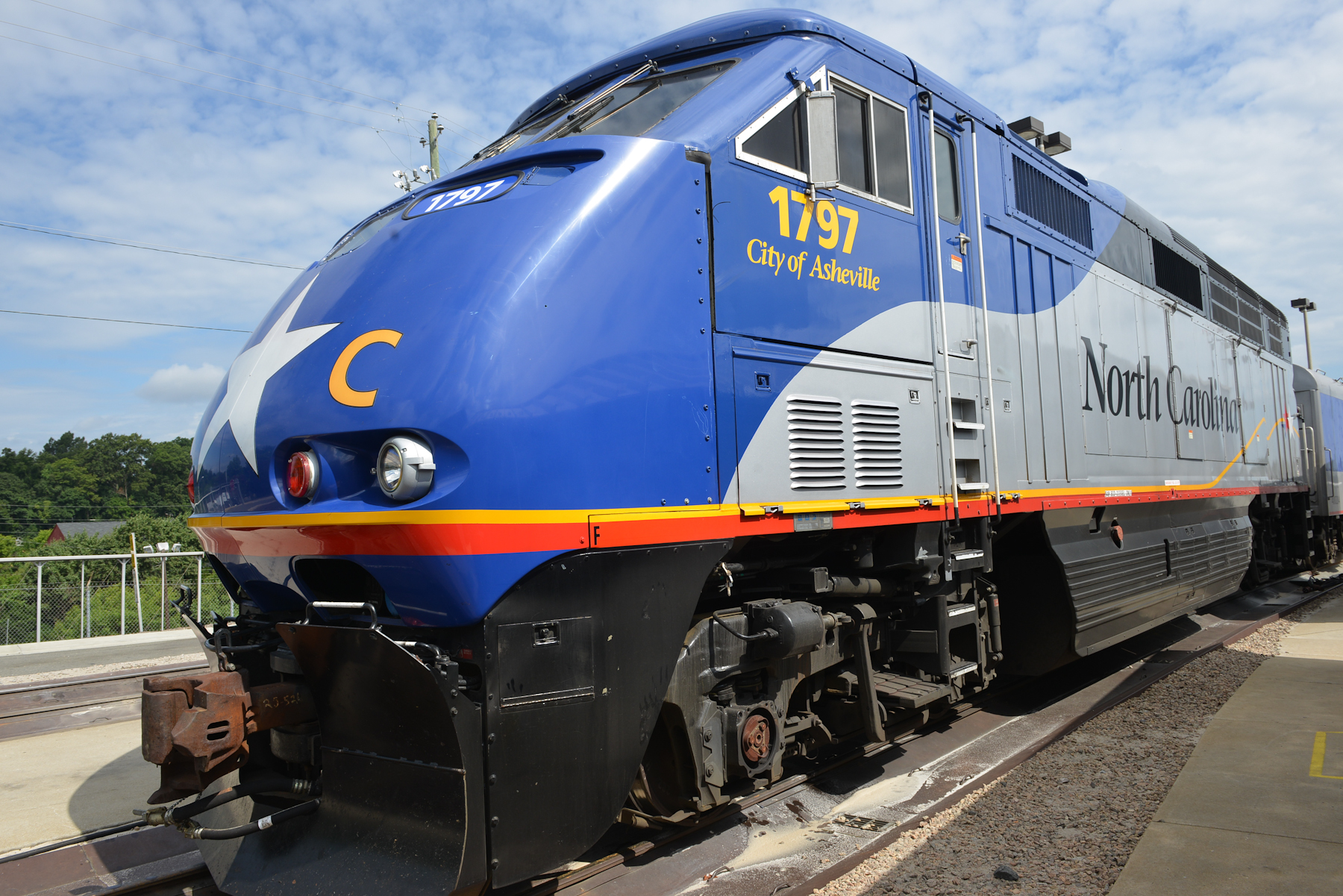
Reestablishing passenger rail service between Salisbury and Asheville presents a significant opportunity to strengthen North Carolina's economy and transportation network. By connecting major population centers—including the Charlotte metro, the Piedmont Triad, the Research Triangle, and the Blue Ridge region—the corridor would enhance mobility for residents, commuters, and visitors while providing a more sustainable and efficient alternative to highway travel. Communities along the route stand to benefit from increased tourism, greater visibility, and new economic activity, particularly in towns with cultural, recreational, and historic appeal.
The economic benefits of the corridor are wide-ranging. Capital investments in the corridor will create a one-time stimulus for North Carolina's economy through activities such as construction spending on rail infrastructure, station development, and related upgrades; the purchase of materials and equipment from local suppliers; engineering and design services provided by in-state firms; and temporary job creation in sectors like construction, architecture, and project management. It is estimated that capital investments will result in a total of 5,270 job-years, $360.5 million in employee earnings, $1.05 billion in economic output, and $33.6 million in local and state tax dollars (monetary estimates provided using 2025$).
.